
Adventure Birding 'n Outdoors in New Guinea's Wild West
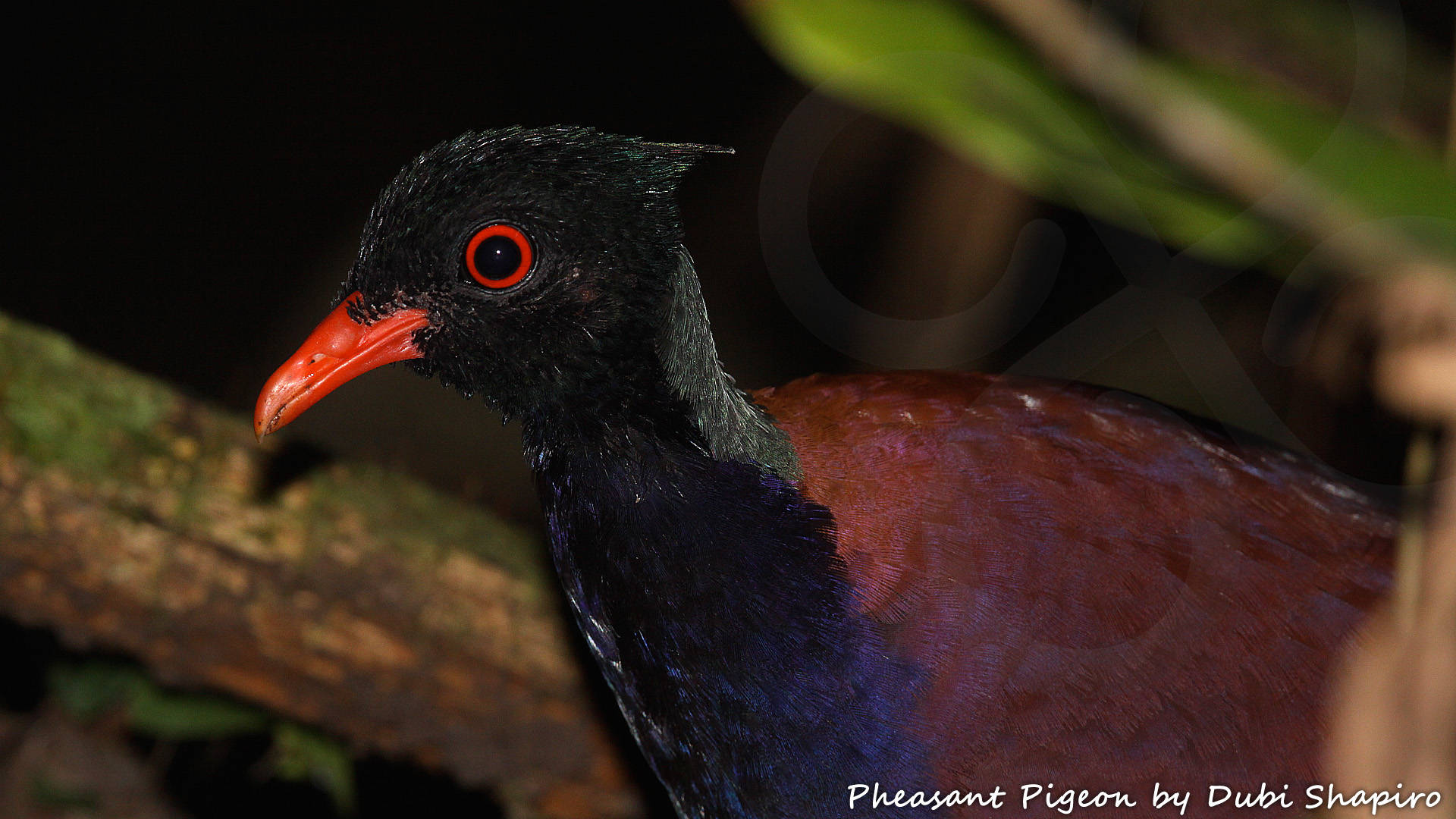
New Guinea forest bird communities differ markedly from elsewhere in featuring an unusually high proportion of ground-dwellers like this strange Pheasant Pigeon Otidiphaps nobilis which belongs in its own genus and is among 290 bird species in West Papua that are endemic to the New Guinea or Papuan avifaunal region. Copyright © Dubi Shapiro pbase.com/dubisha
West Papua foremost is home for a rich and exquisite humid forest avifauna. Exactly 722 bird species have now reliably been recorded from the territory, out of some 780 for the entire New Guinea or Papuan avifaunal region. Knowledge of the birdlife of West Papua remains far less comprehensive than that for adjacent Papua New Guinea, however, and taken in tow by Papua Expeditions you will experience firsthand that the intrepid and careful observer is bound to make significant observations just about anywhere.
The breeding land and fresh water avifauna that adorns West Papua with a nearly mythical status amounts to 599 species. This total includes 290 regional New Guinea endemics and 67 species whose distribution is entirely confined to West Papua alone. Species richness is high, lowland forest habitats typically supporting close to 200 different resident breeding birds. New Guinea forest bird communities differ markedly from elsewhere, however, in featuring an unusually high proportion of fruit- and nectar-eaters as well as ground-dwellers, but no wood-borers.
Australasian passerines including fairywrens Maluridae, honeyeaters Meliphagidae, warblers Acanthizidae, whistlers Pachycephalidae, monarchs Monarchidae, and robins Petroicidae radiated to fill all niches.
Of paramount interest naturally, are the 26 species of bird-of-paradise that occur in West Papua, six of which occur only here and nowhere else on Earth. Among these, the Wilson's Bird-of-paradise Diphyllodes respublica stands out as 'a wanton waste' of extreme beauty (just to use the epic words that the celebrated 19th century naturalist Alfred Russel Wallace bequeathed us), and may well rank among Earth's greatest avian treasures.
Nearly 120 Palearctic and Australian migrants and vagrants have also been recorded from West Papua, and its southeastern Trans-Fly zone, which includes the famed Wasur National Park, is a globally significant staging and wintering ground for waders and waterfowl.
I thought of the long ages of the past, during which the successive generations of this little creature [King Bird-of-paradise Cicinnurus regius] had run their course — year by year being born, and living and dying amid these dark and gloomy woods, with no intelligent eye to gaze upon their loveliness — to all appearance such a wanton waste of beauty.
Papuan bird families
The seven New Guinea endemic bird families (Satinbirds Cnemophilidae, Berrypeckers, Longbills Melanocharitidae, Painted Berrypeckers Paramythiidae, Mottled Berryhunter Rhagologidae, Wattled Ploughbill Eulacestomatidae, Melampittas Melampittidae, and Ifrit Ifritidae) are represented in West Papua, as are the nine families shared with Australia (Cassowaries, Emu Casuariidae, Bowerbirds Ptilonorhynchidae, Australasian Treecreepers Climacteridae, Australasian Wrens Maluridae, Australasian Babblers Pomatostomidae, Logrunners Orthonychidae, Whipbirds Psophodidae, Jewel-babblers, Quail-thrushes Cinclosomatidae, and Australo-Papuan Bellbirds Oreoicidae).
West Papua endemic bird species
The following 67 bird species may only be seen in West Papua and nowhere else on Earth:
☑Bruijn's Brushturkey Aepypodius bruijnii
☑Red-billed Brushturkey Talegalla cuvieri
☑Biak Megapode Megapodius geelvinkianus
☑Snow Mountain Quail Anurophasis monorthonyx
☑Vogelkop Owlet-nightjar Aegotheles affinis
☑Biak Coucal Centropus chalybeus
☑Western Crowned Pigeon Goura cristata
☑Geelvink Fruit Dove Ptilinopus speciosus
☑Geelvink Imperial Pigeon Ducula geelvinkiana
☑White-striped Forest Rail Rallicula leucospila
☑Biak Scops Owl Otus beccarii
☑Kofiau Paradise Kingfisher Tanysiptera ellioti
☑Biak Paradise Kingfisher Tanysiptera riedelii
☑Numfor Paradise Kingfisher Tanysiptera carolinae
☑Geelvink Pygmy Parrot Micropsitta geelvinkiana
☑West Papuan Lorikeet Charmosyna papou
☑Black Lory Chalcopsitta atra
☑Black-winged Lory Eos cyanogenia
☑Biak Lorikeet Trichoglossus rosenbergii
☑Salvadori's Fig Parrot Psittaculirostris salvadorii
☑Blue-fronted Fig Parrot Cyclopsitta gulielmitertii
☑Biak Hooded Pitta Pitta rosenbergii
☑Arfak Catbird Ailuroedus arfakianus
☑Vogelkop Bowerbird Amblyornis inornatus
☑Golden-fronted Bowerbird Amblyornis flavifrons
☑Rufous-sided Honeyeater Ptiloprora erythropleura
☑Western Smoky Honeyeater Melipotes gymnops
☑Wattled Smoky Honeyeater Melipotes carolae
☑Biak Myzomela Myzomela rubrobrunnea
☑Brass's Friarbird Philemon brassi
☑Orange-cheeked Honeyeater Oreornis chrysogenys
☑Vogelkop Melidectes Melidectes leucostephes
☑Vogelkop Scrubwren Aethomyias rufescens
☑Biak Gerygone Gerygone hypoxantha
☑Satin Berrypecker Melanocharis citreola
☑Thick-billed Berrypecker Rhamphocharis crassirostris
☑Western Crested Berrypecker Paramythia olivacea
☑Geelvink Cicadabird Edolisoma meyerii
☑Biak Triller Lalage leucoptera
☑Biak Whistler Pachycephala melanorhyncha
☑Vogelkop Whistler Pachycephala meyeri
☑Baliem Whistler Pachycephala balim
☑Waigeo Shrikethrush Colluricincla affinis
☑Mamberamo Shrikethrush Colluricincla obscura
☑Raja Ampat Pitohui Pitohui cerviniventris
☑Biak Fantail Rhipidura kordensis
☑Kofiau Monarch Symposiachrus julianae
☑Biak Monarch Symposiachrus brehmii
☑Biak Black Flycatcher Myiagra atra
☑Brown-headed Crow Corvus fuscicapillus
☑Long-tailed Paradigalla Paradigalla carunculata
☑Arfak Astrapia Astrapia nigra
☑Western Parotia Parotia sefilata
☑Bronze Parotia Parotia berlepschi
☑Vogelkop Lophorina Lophorina superba
☑Wilson's Bird-of-paradise Diphyllodes respublica
☑Red Bird-of-paradise Paradisaea rubra
☑Snow Mountain Robin Petroica archboldi
☑Ashy Robin Heteromyias albispecularis
☑Smoky Robin Peneothello cryptoleuca
☑Numfor Leaf Warbler Phylloscopus maforensis
☑Biak Leaf Warbler Phylloscopus misoriensis
☑Biak White-eye Zosterops mysorensis
☑Long-tailed Starling Aplonis magna
☑Olive-crowned Flowerpecker Dicaeum pectorale
☑Grey-banded Munia Lonchura vana
☑Black-breasted Munia Lonchura teerinki
Related links
❯Browse our checklist of the birds of West Papua